
Ansible allows administrators to execute on-demand tasks on Ansible managed servers. The ad-hoc commands are the most basic operations that can be performed with Ansible engine. Each ad-hoc command is capable of performing a single operation on host or group of hosts. To perform multiple operations, the administrator should run the series of ad-hoc commands from Ansible […]
Automation
Ansible – Command vs Shell vs Raw Modules

Ansible uses modules to complete the task on the remote server. The most commonly used command modules are “command”, “shell”, and “raw”. Each module has its own advantages and disadvantages. In Ad-hoc command mode, unless you specify the module name, it uses “command” module by default. In this article, we will see the functionality of […]
Ansible – How to Setup Inventory for Easy Operations ?

In Ansible, Setting up inventory is one of the most important tasks. Ansible can work with multiple servers at the same time but the challenge is how to classify the servers. While setting up Ansible environment, you need to classify the hosts as much a possible using the ansible inventory. For an example, By looking […]
Ansible – How to Prepare and Setup Client Nodes ?
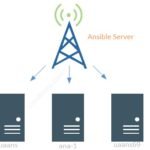
Ansible doesn’t require an agent to push the changes but it needs few configurations on the client side to access the server and perform the tasks without prompting for username/ password/other authentication. I would recommend using non-root user for Ansible setup but ensure that user is consistent across your environment. Let’s setup the servers for Ansible […]
How to Install Ansible Engine on CentOS / RHEL

Installing the Ansible engine and set up the environment is pretty straightforward. Ansible engine can be installed on the majority of Linux flavors which includes CentOS, RHEL, Ubuntu, and Debian but it doesn’t support Windows, Solaris, and AIX. But there are no restrictions to participate as ansible clients. Ansible uses the SSH protocol to manage the Unix and Linux […]
What is Ansible ? How it Works ? Why do we need to use ?

Why do we need Configuration Management tool? Anyone who works as an operations engineer has witnessed a bunch of issues with manual configuration approach and more repetitive tasks which are time-consuming. How many times key resources left the company and new engineer struggle to understand the environment and start performing the tasks without escalation? Server configuration is a […]
Puppet – Puppet Forge Modules – Overview

Puppet forge is a module repository for Puppet Open Source and Puppet Enterprise IT automation software. These modules are written by puppet community members and puppet reviews the module before publishing it. Puppet also supports many of modules in this repository. Why do we require pre-built puppet modules ? To simply system administrator work and […]
Puppet – How to Classify the Node types ?
We need to classify the nodes when you have to perform similar operation on different OS variant. For an example, If you want to install Apache package on Linux systems, you need to use package name as “httpd” on Redhat variants and “apache2” on Debian variants. In such a cases, you need to tweak your module […]
Puppet – Augeas – Edit System configuration files

This article is going to demonstrates that editing/updating files on puppet agent nodes. In the previous article , we have seen that how to copy the static files from “module/files” directory(Puppet Server) to puppet agent nodes. But sometimes , you can’t replace the complete file and you may need to edit specific line on that. For example […]
Puppet – Manifest examples – Managing FILES – SERVICES
This article is going to brief about creating new files , directories, changing the file permission, installing package and managing the services using puppet server on puppet agent nodes. For an example, if you want to configure the ntp client on 100’s of servers , you could simply write a small manifest on puppet server […]