In LVM, logical volumes size can be increased or decreased depends on our needs. Logical volume can be shirked/reduced using “lvreduce” command but this will not reduce the filesystem. You need to reduce the filesystem before reducing the logical volume. Logical volume can be extended/increased using “lvextend” command.Once you have extended the logical volume ,then […]
Linux LVM – Volume Creation & Operations
As of now we have seen physical volume administration and volume group administration on this Linux’s LVM tutorial series.Logical volume is the top most virtual object in the LVM. Once you have constructed physical volume and volume group,the next step will creating the logical volume and mount the filesystem for storing the data.Here we will […]
Linux – LVM – Volume Group Operations
We have already seen the basics of logical volume manager structure on the previous article.Here we are going to see about Logical volume manager’s volume group operations and management. Volume group is high level container in LVM which contains one or more physical disk or LUNS. A volume group can span in to multiple disks, whether […]
How to Install LVM on Linux and Disk Operations
LVM will be installed by default on Redhat Linux installation.But sometimes if you select the minimum package installation method,LVM will not be installed.So you need to install LVM package separately .Here we will see the LVM installation method and if its already installed how to verify it .Logical volume manager has two versions and those […]
Solaris 11 – ZFS Must known features
In this ZFS tutorial series,Here we are going to see about new features of ZFS and it’s usage in real production environment. Oracle is continuously developing ZFS and they brought some of the nice features in to Solaris 11 ZFS . Here we are mainly focusing on ZFS deduplication and ZFS encryption mechanisms. ZFS Deduplication is the process of […]
ZFS – ZPOOL Cache and Log Devices Administration
In this ZFS training/tutorial series,this article will talk about ZFS performance issues.If you didn’t tune the system according to the application requirement or vise-verse,definitely you will see the performance issues.For an example ,some of the applications may have more read requests than write and databases sends more write requests than read.So according the application,you need […]
ZFS – How to Extend ZPOOL and Re-layout ?
One of the prime job of Unix administrators will be extending and reducing the volumes/filesystems according to the application team requirement.In Veritas volume manages,we carry out such a tasks in online without un-mounting the filesystems. To increase or reduce the filesystem, you need to add or remove the disks from the diskgroup in vxvm. But in ZFS, once […]
ZFS – Datasets Administration and Emulated Volumes
A dataset is a child (virtual) filesystem of the parent zpool or parent dataset. Solaris ZFS Datasets are very light weight and easy to administrate. Theatrically speaking, we can create 2^64 datasets in single zpool. Solaris ZFS datasets is similar to VXVM volume but not completely. These datasets doesn’t require any vfstab entry to mount […]
Solaris ZFS – Free Tutorial/Training
Oracle took a brave decision by making ZFS as default root filesystem in Solaris 11 onwards. So ZFS knowledge is must for all of the Solaris administrator who is going to work on Solaris 11.I have worked on many volume manages like SVM(Solaris volume manager),VXVM (veritas volume manager) and LVM (Logical volume manager) but ZFS is one-step ahead compare to other volume […]
How to setup VMware ESXi 5.1 environment on VMware workstation
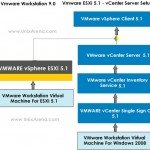
VMware ESXi and clouds are trending topics in infrastructure industry now. So most of the windows or Unix administrator would like to learn VMware ESXi .Your current organization will not give any Vmware training unless there is a business requirements for them. You can go for an external vmware training but it too costly and […]