
Cloud War or Data-center war ? There is a healthy competition out in the market to reduce the overall operating cost on IT. Companies are benefited with the cloud revolution, Virtualization and automation. Most of the organisations are moving towards asset free to reduce their additional investments on IT equipment. But all the organizations can’t just […]
Openstack
Deploying Openstack on Redhat – Packstack Method (Mitaka)

This article will help you to setup Openstack private cloud on Redhat Enterprise Linux. In this method , I will demonstrate that how to setup openstack environment using packstack. There are many companies are evaluating openstack on their test environments and some people are trying make a proof of concept. Openstack is not just a […]
VMware Integrated Openstack – Overview – Part 1

This articles provides the overview of VMware Integrated Openstack (VIO). Openstack is an opensource framework for creating an IAAS (Infrastructure as a service) cloud. It provides a cloud style API to simplify the consumption of virtual infrastructure technologies. Openstack doesn’t not provide any virtual technologies to create the OS instances. It always require hypervisors like KVM, […]
Openstack – Backup cinder volumes using swift storage

This article will demonstrates that how to configure the cinder volumes backup using swift as backend storage. As you all know that swift is the Object storage within the openstack project. Swift is highly available , distributed and consistent object storage. In the previous article ,we have seen that how to make the glance image service […]
Openstack – Re-Configure Glance to use swift Storage

This article will demonstrates that how to re-configure the glance image-service to use backend store as swift object storage. By default , Image service will use the local filesystem to store the images when you are uploading it. The default local filesystem store directory is “/var/lib/glance/images/” on the system where you have configured the glance image service. In UnixArena tutorial […]
Openstack – Configure Telemetry Module – ceilometer – Part 18

This article will demonstrates the deployment of telemetry modules on Openstack environment. The telemetry services are developed in the name of ceilometer. Ceilometer provides a framework for monitoring, alarming and metering the OpenStack cloud resources. The Ceilometer efficiently polls metering data related to OpenStack services. It collects event & metering data by monitoring notifications sent from OpenStack services. […]
Openstack – Configure Orchestration Module (HEAT) – Part 17

HEAT is Openstack’s orchestration program. It uses the template to create and manage openstack cloud resources. These templates normally called as HOT (HEAT orchestration template). The templates will help to you to provision bunch of instances, floating IPs, volumes, security groups and users in quick time. A Heat template describes the infrastructure for a cloud application in […]
Openstack – Create Initial Rings – Object Storage – Part 16

This article will demonstrates that how to create the initial account, container, and object rings. These rings creates configuration files that each node uses to determine and deploy the storage architecture. The account server uses the account ring to maintain lists of containers. The container server uses the container ring to maintain lists of objects . The object […]
Openstack – Configure the Object Storage – Storage Node – Part 15
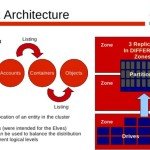
This article will demonstrates that how to install and configure the object storage node for Openstack environment. Object storage node is responsible for account , container, and object services. For the tutorial simplicity, I will use the block storage server as object storage server. We will add new storage LUN for object storage service and […]
Openstack – Configure the Object Storage – Controller Node – Part 14
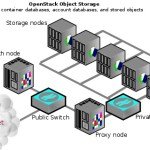
Openstack Object storage solution has been developed under the project called “swift”. It’s a multi-tenant object storage system and highly scalable one. It can manage large amounts of unstructured data at low cost through a RESTful HTTP API. swift-proxy-server service accepts OpenStack Object Storage API and raw HTTP requests to upload files, modify metadata, and create […]