
A recent report from insight generator Market Watch predicts that the global business intelligence market will enjoy a compounded annual growth rate of 26.98% in the next six years and will be valued at $147.19 billion by 2025. More and more organizations are turning to data-driven decision making to address the challenges of complex business decisions. […]
kubernetes
Origin (OpenShift) Deployment in VM – All in One for LAB

How to Deploy Openshift in VM quickly? Is it possible to configure all the Openshift components in one node? How to experience the real Openshift web UI? Openshift is one of the Kubernetes’s variants and it’s developed and supported by Redhat. Origin is an upstream open source project to experience and test Openshift. This article will […]
Kubernetes /Minikube – How to Deploy Application using Dashboard ?

How to deploy an application on Kubernetes using Dashboard? “Minikube“ is one of the Kubernetes’s variant to experience on a desktop/laptop. This article will walk through how to create deploy a new application on Kubernetes cluster. We could deploy a containerized applications on top of Kubernetes cluster using the various method. In this example, we […]
Kubernetes /Minikube – Enable Dashboard – RHEL 7 / CentOS 7

Are you missing Kubenertes Dashboard on Minikube deployment? This article will walk through how to enable the dashboard on Minikube deployment on localhost and remote client. The dashboard is a web-based user interface for Kubernetes. Web-UI is useful to deploy containerized applications in Kubernetes cluster and manage the cluster resources. It could also help to […]
How to Deploy Kubernetes ? Minikube on RHEL/CentOS

How to create a Kubernetes’s sandbox environment?. How to experience Kubernetes in Laptop/Desktop? MiniQube is developed for desktop/Laptop environment to experience the Kubernetes cluster. “Minikube” runs a single-node Kubernetes cluster inside the Virtual Machine on Laptop/Desktop with help of virtualization technology (Virtual Box, KVM, VMware Fusion). This article will walk through the deployment of Minikube […]
Kubernetes – Overview of Pod and Service

This article will give a high-level view of Kubernetes Pods and Services. Kubernetes runs containers but always inside the pods. You can’t directly deploy container without pods in Kubernetes. The shared context of the pod is a set of Linux namespaces, cgroups, and other facets of isolation. Docker container does the same but the application gets the further sub-isolation since […]
How Kubernetes works ? – Core Components and Architecture
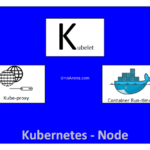
Kubernetes is an open-source generic multi-container management software which offers deployment, scaling, descaling & load balancing. It’s an orchestrator for microservices applications. Kubernetes would make us see the whole data center as a computer. Kubernetes can manage any type of containers which follows OCI standards. ( Docker or Core OS’s rkt or any ). Kubernetes […]
What is Kubernetes – Good to Know – An Overview
Kubernetes is a leading container orchestration platform for automating application deployment, scaling, and management. Container brings a lot of scalability challenges. But Kubernetes can take over the challenges and lets you concentrate only on deployments. Its platform agnostic. Kubernetes is most often used to manage the Docker. But it can also work with any container […]
Self Managing Kubernetes – Turbonomic 6.1

I have been worked on Unix and then move to Linux, then virtualized Linux Environment using VMware vSphere and now overseeing the journey to cloud-native. Technology just keeps changing and we need to adopt new technologies, make it more efficient and more profitable to the customer. Service-based IT firms and vendors are forced to evolving and innovating to stay […]