This article will demonstrate that how to stop and start the Openstack services on Ubuntu when you have done the installation through the devstack method. If you followed the devstack method for deploying the openstack, there are some set of scripts will be available to perform the stop and start openstack services without much pain. […]
How to Deploy Openstack on Ubuntu ?
Deploying openstack on Ubuntu is very easy if you use the devstack method. DevStack is not general openstack installer but it will help us to reduce the manual configuration for first time deployment. Let’s follow the easiest method to understand the openstack deployment and other functionality. Here I have chosen Ubuntu as my base operating system/Hyper-visor. Why I should […]
Openstack Tutorial – History of Private Cloud

The whole world is buzzing on the cloud and cloud related technologies. Would you like to know the history of the cloud ? Let’s see. The private cloud has been started with Eucalyptus & Opennebula around 2003-2008 period and these both cloud software are almost similar to Amazon AWS (Pubic cloud). In 2009, NASA require cloud computing […]
openstack Architecture and components overview
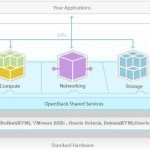
Let’s talk about Openstack architecture and Components . In the last article ,we have seen the history of private cloud softwares and Openstack. OpenStack is a cloud computing platform that controls large number of compute nodes , storage, and networking resources throughout a datacenter, all managed through a dashboard(Horizon) that gives administrators control while empowering their users to provision […]
LDOM – Memory / CPU Reallocation on Hard Partitioning
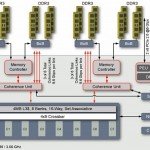
In LDOM , we can’t dynamically remove/add memory resource when the resources are physically bound. This will make hard-time for administrator and application owners where we need to bring down the guest domain every-time when you re-reconfigure memory resources. Normally Oracle Super-cluster servers are pre-configured with Hard Partitioning using the LDOM virtualization. In typical LDOM method […]
How to Map the VMware virtual Disks for Linux VM ?
Most of the VMware virtual machines are configured with few virtual disks with different size according to the project requirement. When it comes to the Linux VM , there will be a dedicated disk for the root filesystem and other disks are used for application/data. So whenever there is request for resizing the existing drive , it […]
Cisco UCS Manager – Master Sheet

This article will explain the Cisco UCS B-Series setup from the scratch . As you know that Cisco UCS is highly customizable and I have demonstrated one of the way of UCS deployment. This may vary for each environment but Cisco UCS beginners can use this article since it explains from where to start and end. […]
Cisco UCS – Configuring NTP and Configuration Backup

NTP configuration is essential for any operating systems to display the accurate time. Cisco UCS also requires instance-specific time zone setting and an NTP server to ensure the correct time display in Cisco UCS Manager. Prior to perform the NTP configuration , you must open a incoming port 123/UDP to Cisco UCS domain. This article will show […]
How to Configure Call Home Facility in Cisco UCS Manager ?

Cisco UCS manager provides facility to send email-based notification for critical system policies. There are multiple formats available which are compatible with pager services or XML-based automated parsing applications. Once you have configured this facility , system will send the automated alert to the pager if there is any issue. Using the smart home service future, Cisco support case […]
Cisco UCS – How to download Tech Support Files

You can easily download Tech support files from Cisco UCS manager . This file is required when you have open a case with Cisco for any issue. There are several different types of tech-support files that can be collected depending on which scope of the system needs more investigation. These support files generally contains the system generated […]