
In Ansible, passing a variable from one playbook to another playbook is not a straight forward. (If the target hosts are different). We might need to get the variable value from one host and use that value against another host in some cases. This article will provide a solution to overcome this kind of tricky situation in Ansible. Here are the scenarios […]
How Kubernetes works ? – Core Components and Architecture
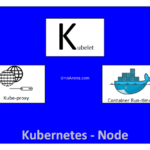
Kubernetes is an open-source generic multi-container management software which offers deployment, scaling, descaling & load balancing. It’s an orchestrator for microservices applications. Kubernetes would make us see the whole data center as a computer. Kubernetes can manage any type of containers which follows OCI standards. ( Docker or Core OS’s rkt or any ). Kubernetes […]
What is Kubernetes – Good to Know – An Overview

Kubernetes is a leading container orchestration platform for automating application deployment, scaling, and management. Container brings a lot of scalability challenges. But Kubernetes can take over the challenges and lets you concentrate only on deployments. Its platform agnostic. Kubernetes is most often used to manage the Docker. But it can also work with any container […]
VMware vSphere – Build VM using Terraform – Cent OS/RHEL (Redhat Linux)
This article will provide step by step procedure for building “CentOS” /”Redhat Linux” Virtual Machine using Terraform tool on the VMware vSphere environment. Terraform is an excellent tool to build VM’s on VMware vSphere environment. Terraform doesn’t require any dedicated host. You could download an opensource/free version of Terraform on your laptop or desktop and […]
VMware Template Automation Using Packer – Redhat/CentOS
VMware template creation can be automated using packer. VMware Virtual Machine deployments are very faster because of the template based VM build. But due to rapid development and fast-paced Operating system releases, we might need to build multiple templates and keep it ready for deployment. A customer might ask different operating system release and you […]
Jenkins – Ansible – Configure Dynamic Inventory

Are you using Jenkins as front-end GUI for Ansible Automation? Have you ever tried the dynamic inventory in Jenkin’s Ansible plugin? Ansible Inventory can be created using the plugin’s dynamic inventory feature. This feature could be very useful when you want to pass hosts as user-defined input and that’s is not part any of the […]
Jenkins – Store Console Output in Linux Filesystem – Artifacts
How to store Jenkins job’s console output in another system? There are much opensource software is available to store the logs and retrieve logs in time. Jfrog is one of the most famous artifact solutions. Here, we will be using native Linux/Unix commands to pull the Jenkins logs and store it in local/NFS filesystem for […]
Jenkins – Rename Build Job Names – Build Name setter

Jenkins job’s build name would be named with the numeric number by default in increment manner. After configuring the Jenkins job, the first build job would be named as “1”, the second job would be named as “2” and so on. Most of the cases, no one prefers to change the default build naming algorithm. […]
Jenkins Console – Xterm Terminal – Colorized Ansible playbook Output
This artcile will walk through the installing and configuring Ansicolor plugin in Jenkins to make colorized output in ansible playbook stdout. Jenkins console is very plain and simple. If you are using Jenkins to run the ansible playbook, you might notice that colorful output might be missing. Ansible Tower/AWX offers the colorful stdout in the […]
Ansible – Configure Windows servers as Ansible Client – winrm
Ansible is not just for Linux. It can also be used for Windows servers automation. This article will explain how to prepare windows servers for Ansible automation. Ansible uses WinRM protocol to establish a connection with Windows hosts. (i.e Linux/Unix like hosts uses SSH protocol). Ansible requires PowerShell 3.0 or newer and at least .NET […]