How to extend / (root) filesystem without reinstalling the operating system ?. Is it possible to extend the root filesystem without destroying data? Is it possible to extend on the fly? The answer is yes if you are using LVM. This article will walk you through extending the root filesystem on Redhat Linux 8 (RHEL […]
AWS
Kubernetes Backup – Kasten K10 Test drive
The Kubernetes platform is fundamentally different from earlier compute infrastructures and IaaS. In Kubernetes, there is no mapping of applications to servers or VMs. so the backup solution needs to understand this Kubernetes-native architectural pattern, and be able to deal with continuous change. High-velocity application development and deployment cycles are the norms in Kubernetes environments. […]
What is Infrastructure as Code ? IaC

Define all your IT infrastructure as Code instead of creating it manually. So that Infrastructure resources can be easily re-created or replicated. Managing IT infrastructure might be a hard job in the past but not now. In the past, system administrators have to manually manage and configure all of the hardware and software that was […]
Amazon AWS – Change EBS volume type using Snapshot – Part 14
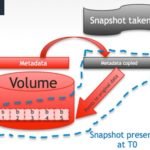
This article will walk through that how to change the AWS EBS volume type using snapshot feature. There is a limitation with AWS that you can’t change the volume type on fly. You must need to halt the instance and change the volume type. But again , you can’t switch to all the volume types […]
Amazon AWS – Change volume type – SSD GP2 to SSD IOPS – Part 13
This article will walk through that how to change the AWS EBS volume type from SSD GP2 to SSD IOPS volume type. Changing the volume type is not straight forward for all the volume types. Due to the instance limitation, you can’t change the volume type on the fly. You need to halt the instance […]
Amazon AWS – Connect to AWS instance using Putty – Part 12
This article will walk through to connect to the AWS cloud instance using putty software from windows laptop. If you use MAC OS or Linux OS , you could easily connect to the AWS instance using the downloaded *.pem key file from AWS Portal. pem key file format is not supported in windows ssh client […]
Amazon AWS – Launching EC2 Cloud Instance – Part 11
This article will walk through to create the first AWS instance and launch it. We will also see that how to access the AWS instance from internet. Configure the virtual firewall to protect the instance from different external attacks by restricting the number of allowed ports. You could also protect the instance against the accidental […]
Amazon AWS – Elastic Block Store – EBS – Overview – Part 10
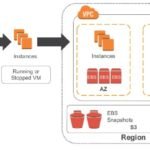
This article will walk through about Elastic Block Store (EBS) volume and it’s use cases. The last article walk through about EC2 and different prizing options and various type of EC2 instances available in Amazon Public cloud. Before launching the first EC2 instance , you must know about EBS and it’s use. Amazon EBS is persistent […]
Amazon AWS – Elastic Compute Cloud (EC2) – Overview – Part 9
Amazon AWS offers compute space in the cloud. Elastic Compute Cloud (EC2) is a web service that provides re-sizeable compute capacity in the cloud on demand basis. To setup the on-premise computing will take minimum couple of months to make it operational. But in the cloud service based computing will be available in few minutes. […]
Amazon AWS – S3 Lifecycle Storage Management with Glacier – Part 8

Amazon AWS – S3 (Simple Storage System) provides the lifecycle storage management system to reduce the operating cost by moving the data in to different storage classes (“S3 – IA” & “Glacier- Archive” are cheaper storage compare to S3). At the same time , AWS also provides the robust automatic system which enables to move […]